
Nag Panchami 2026 : Date, Significance, and Sacred Traditions
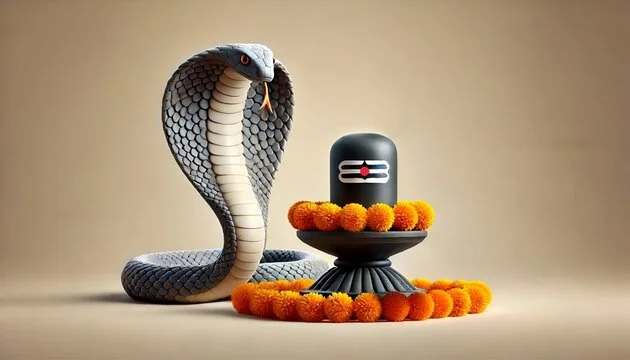
1. Why is the Nag Panchami festival special ?
Nag Panchami is an extremely important and popular festival in the Hindu religion. This festival is celebrated especially in the Indian subcontinent and holds religious, cultural, and social significance. The festival of Nag Panchami is observed on the fifth day (Panchami) of the bright fortnight (Shukla Paksha) in the month of Shravan, which usually falls in July or August. This day is especially a symbol of worshipping serpents and showing reverence toward them. Various religious beliefs, stories, and traditions are associated with this day, which further enhance its importance.
Table of Contents
ToggleIn India, festivals are not just celebrations; they reflect our relationship with nature, life, and faith. Nag Panchami is one such festival that conveys the message of coexistence between humans and animals. This festival is especially dedicated to the Serpent God, who is considered highly venerable in Indian culture.
On this day, people worship serpents, offer them milk, and pray for the protection and prosperity of their families.
2. Religious Significance of Nag Panchami
Serpents hold great importance in Hinduism. They are regarded as helpers and protectors of the gods. Lord Shiva wears a garland of serpents around his neck, symbolizing his infinite form. The image of Lord Vishnu reclining on the serpent Shesha is also very famous. Additionally, serpents are mentioned in the Mahabharata, proving that they hold a significant place. The festival of Nag Panchami expresses this honor and reverence through the worship of serpents.
(A) Key Timings for Nag Panchami 2026
- Date: Monday, August 17, 2026
- Puja Muhurat (Morning): 06:04 AM to 08:39 AM
- Panchami Tithi Begins: 04:52 PM on August 16, 2026
- Panchami Tithi Ends: 05:00 PM on August 17, 2026.
(B) Importance of Serpents in Hinduism
In Hinduism, serpents are associated with Vishnu, Shiva, Lord Indra, and other deities. The symbol of serpents is not only important in religious contexts but also has cultural and social significance. Many Hindu scriptures describe and prescribe the worship of serpents. A particular form of serpents with “five hoods” is widely worshipped. There are also many stories in Hinduism about the different forms of serpents, prominently mentioning Shesha Naga, Kanvera, Vasuki, Takshaka, and others.
Serpents hold special significance in Hinduism. They are worshipped as gods and protectors. The king of serpents, “Shesha Naga,” is depicted as the bed on which Lord Vishnu reclines. Serpents are seen adorning Lord Shiva’s neck as a prominent ornament. Furthermore, scriptures like the Mahabharata and Ramayana also mention serpents, such as Kumbhakarna’s brother, Nagaraja Vasuki, who was a devotee of Vishnu.
The reason for worshipping serpents is believed to be that they possess a special power that bestows health, prosperity, and peace upon humans. Along with this, worshipping serpents is also believed to remove the adversities of time, poverty, and sins.
(C) What happens on Nag Panchami ?
The festival of Nag Panchami is especially associated with the worship of serpents. On this day, serpents are worshipped so that life may be filled with happiness, prosperity, and peace. It is also considered a day to express respect toward serpents. On this day, idols, pictures, or symbols of serpents are specially worshipped. Many people observe a fast on this day and offer milk, sweets, fruits, etc., to serpents.
3. The Ritual Procedure of Nag Panchami
(A) Bathing and Purity
Before starting the puja on this day, devotees bathe and purify their bodies. This purity symbolizes the sanctity of the soul. Consuming pure food is also advised on this day.
(B) Installation of Serpent Idols
Idols or pictures of serpents are installed in homes or temples. Devotees offer flowers, lamps, incense, and prasad to the serpents. The purpose of the puja is to seek their blessings and bring happiness and prosperity into life.
(C) Worship of Serpents
At many places, real serpents are also worshipped. Special pujas of serpents are held in temples, where devotees offer them milk and fruits. Along with this, mantras are chanted to remove their afflictions.
(D) Observing Fasts and Austerities
Some people observe a fast and remain austere on this day. This fast is dedicated to the worship of serpents. By fasting, a person attempts to purify their mind, body, and soul.
(E) Special Puja Materials for Nag Panchami
On Nag Panchami, some special materials are used in the puja, including milk, fruits, flowers, sweets, turmeric, sandalwood, and leaves.
(F) Distribution of Prasad
After the puja, prasad is distributed. This prasad serves to promote love and goodwill in society.

4. Stories of Nag Panchami and Their Meaning
(A) The Story of Kadru and Vinata
This story is narrated in the Adi Parva of the Mahabharata. Kadru and Vinata were two sisters. Kadru had a hundred sons who were serpents, while Vinata had two sons, one of whom was Garuda.
Once, there was a dispute between Kadru and Vinata regarding the color of the sky. Kadru said the sky was black, while Vinata said it was white. On this, Kadru ordered her serpents to make the sky black so that she could prove herself right. After this, Vinata was punished by Kadru’s serpents. Later, Vinata performed a fast and celebrated the festival of Nag Panchami to get her sons freed from Kadru. This marked the beginning of the tradition of observing and worshipping Nag Panchami.
(B) Shesha Naga and Lord Vishnu
Shesha Naga, who is said to serve as Lord Vishnu’s serpent bed during his rest, is described in Hinduism. Shesha Naga’s form is infinite, and his primary function is to protect Lord Vishnu. On Nag Panchami, Shesha Naga is worshipped so that Lord Vishnu’s blessings may bring prosperity and peace into life.
(C) The Mahabharata Reference
Serpents also hold a special place in the Mahabharata. After the abduction of Draupadi, Arjuna fought with the serpents. This is also a reason why worshipping serpents on Nag Panchami is believed to destroy sins and bring peace to a person’s life.
(D) The Ramayana Reference
Serpents are also mentioned in the Ramayana, such as Nagaraja Kambal and other serpents. By the grace of Rama, the serpents received protection from demons. Worshipping them on this day brings happiness and prosperity to the home.
5. The Connection Between Nag and Kundalini
In Indian tradition, the serpent is not just a creature but a symbol of power, energy, and balance. Nag Panchami provides an opportunity to understand these symbols.
Kundalini energy is depicted as a serpent
Serpents are considered connected to the earth’s fertility and the water element
Serpents are regarded as symbols of hidden power and protection
For this reason, serpent motifs are seen in temples, idols, and mystical diagrams (yantras).
In yoga and tantra, Kundalini energy is considered to be like a serpent coiled in the Sushumna nadi. When this energy is awakened, it brings about:
Self-realization
Mental balance
Spiritual advancement
Nag Panchami is a symbolic remembrance of this inner awakening.
6. Cultural Traditions of Nag Panchami
(A) Dance and Music
In various regions of India, special dances and music are organized on Nag Panchami. At many places, folk artists perform dances as serpents and sing various types of songs. These cultural events make the day even more vibrant.
(B) Poetry and Verses
On Nag Panchami, poetry, verses, and songs specifically based on serpents and their significance are presented. These instill religious feelings and goodwill among people.
(C) Social Gatherings
On this day, a message of unity and brotherhood is given among family and society. People meet each other and participate in the day’s worship. Special meals are also prepared on this day, which are distributed among family and society.
Women play a special role in Nag Panchami. Women observe a fast on this day and pray for the well-being of their families.
It is believed that:
The Serpent God quickly hears women’s prayers
This fast protects children and the family
Through this festival, women receive both faith and strength
During the rainy season, it is common for serpents to come out while working in the fields. Nag Panchami reminds farmers that:
Serpents control rats in the fields
They are protectors of crops
Killing them disrupts the balance of nature
Thus, Nag Panchami is deeply connected to agriculture and the environment.
7. Nag Panchami and the Local Economy
Nag Panchami is not just a religious festival but also linked to the livelihoods of many people. On this occasion:
Flower and puja material sellers
Artisans who make clay idols
Servants associated with local temples
Small traders at rural fairs
all receive employment. Fairs held on Nag Panchami in villages boost local trade.
8. Scientific Aspects of Nag Panchami
The festival of Nag Panchami is not only important from a religious perspective but also has some scientific aspects behind it. Worshipping serpents helps maintain a balance in their population, which is beneficial for the ecosystem. The life cycle of serpents and their role are extremely important in maintaining ecological balance.
Nag or serpents are an essential part of the ecosystem.
From a scientific perspective:
Snakes control the population of rats
They indirectly protect crops
Medicines are made from snake venom
This makes it clear that serpents are useful not only religiously but also scientifically.
Today, many organizations are celebrating Nag Panchami as:
Snake Conservation Awareness Day
Wildlife Conservation Campaign
The aim is to explain to people that:
Killing snakes is not a solution
Rescue and rehabilitation are necessary

9. Modern Forms of Nag Panchami
Nowadays, the festival of Nag Panchami is being celebrated with great enthusiasm in cities as well. Previously, this festival was limited to villages, but now it is also celebrated in big cities. This day is observed as a social occasion, where people greet each other and organize cultural programs.
The current generation has started viewing Nag Panchami as:
An environmental message
A cultural identity
Traditional knowledge
Activities on this topic are also held in schools.
In Indian philosophy, the serpent symbolizes power, energy, and Kundalini. This festival also inspires us toward inner awareness.
10. Nag Panchami in Different States of India
Nag Panchami is celebrated all over India, but its form and traditions vary in each region. This diversity is the hallmark of Indian culture.
North India
In Uttar Pradesh, Bihar, and Madhya Pradesh, people draw pictures of serpents using cow dung or clay on the walls of their houses on Nag Panchami. This is considered auspicious. Women observe a fast and pray for the protection of their families.
Maharashtra
Nag Panchami holds special significance in Maharashtra. Here, people worship Nagoba. At some places, there is also a tradition of feeding milk to serpents, although now people are increasingly moving towards symbolic worship.
Karnataka and Andhra Pradesh
In these states, Nag Panchami is called Nagaradhane. People visit serpent temples and perform special pujas. The serpent god is also considered a family deity here.
West Bengal
In Bengal, Nag Panchami is associated with Manasa Puja. Goddess Manasa is considered the goddess of serpents. On this day, folk songs and stories are narrated.
In rural areas, Nag Panchami is still celebrated in its traditional form. People worship snake holes and place milk for the serpents.
In urban areas, one can see:
Worship of serpent idols or pictures
Temple visits
Environmental awareness programs
These changes reflect the evolution in thinking over time.
11. Conclusion
Nag Panchami is an extremely important festival of the Hindu religion, which expresses reverence and respect toward serpents. Worshipping on this day brings prosperity, happiness, and peace to a person’s life. At the same time, this festival is also important from religious, cultural, and social perspectives. The celebration of Nag Panchami not only keeps religious traditions alive but also promotes traditional folk arts, cultural heritage, and collective harmony in society.
O Serpent God,
Give us not fear, but understanding
Not power, but balance
And on this earth,
teach us to live with respect
towards every living being.
Warm wishes for Nag Panchami.
People Also Ask (PAA)
Do snakes really drink milk?
Answer: No, it has been scientifically proven that snakes cannot drink milk. Snakes are lactose intolerant, and milk can be harmful to them. This is merely a religious belief and tradition. Instead of feeding real snakes milk, one should offer it to their idol or picture.Which plants and trees are worshipped on Nag Panchami?
Answer: On Nag Panchami, the following are especially worshipped:
Neem tree: because it is believed that the Serpent God resides on the neem tree.
Kadamba tree: due to its association with Lord Krishna.
Peepal and Banyan: considered sacred trees.
Tulsi: At many places, the Serpent God is also worshipped near the Tulsi plant.
Why does this festival turn ‘fear’ itself into a deity?
Answer: In every religion around the world, people worship pleasant, beautiful, and safe deities.
Nag Panchami is the only festival that places your biggest enemy (the snake) on the worship pedestal.
It teaches you—”Respect the thing you fear; it will become your protector.”
If you fight the ‘snakes’ in your life (failure, job fear, breakup), they bite you; if you accept them, they become calm. Nag Panchami = a day to befriend your fears.Is it the ‘Universe’s Immunity Test’?
Answer: According to Ayurveda and astrology, the sun is in the Cancer zodiac during the month of Shravan, which is a factor for emotions and mental instability.
The milk offered to the serpent on Nag Panchami actually symbolizes cooling our digestive system (agni).
That is—after the heat of summer, the rains begin, and our body becomes susceptible to infections. Nag Panchami reminds us to turn poison into medicine—just as snake venom is used to make vaccines, similarly, turn your weakness into your strength.Is this a day to acknowledge ‘the Wife’s Pain’?
Answer: Everyone narrates the story of Nag Devata (Nag Panchami), but did you know this festival is dedicated to the female serpent (Nagini)?
According to mythological legend, when the serpents were cursed to have their heads (dwij) cut off, all the male and female serpents became distraught.
This festival is a symbol of ‘women’s pain and resistance.’ How aggressive a female serpent becomes to protect her children and nest—this festival honors that self-defense instinct of mothers, sisters, and wives, which is often overlooked.